

Resources
Latest resources

AI Coding Tool Adoption Doesn't Equal Value Delivered: Why Productivity Stalls and How to Fix It

AI coding tools usually aren't the problem. Adoption stalls when the tools land in workflows, repositories, and policies that nobody changed to use them. Stalled adoption looks like seats that are assigned but unused, or used heavily without changing how fast work ships.

How to Train Developers to Use AI Coding Assistants Effectively: A 4-Week Plan
Effective AI coding assistant training is structured practice on real work, not a tool overview or a one-day workshop. A four-week plan works well: two weeks of coached practice on a shared workflow, then two weeks applying that workflow to real backlog items, measured against a baseline.

What Is Spec-Driven Development? A Practical Guide for AI-Assisted Engineering Teams
Spec-driven development is a workflow in which engineers write a clear, reviewable specification before an AI coding assistant generates or changes code.
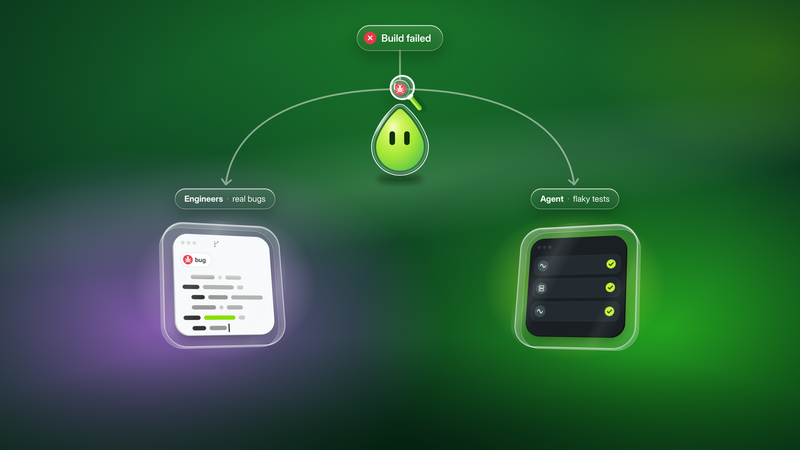
The First Agent Worth Running in Your Pipeline

Pipeline-failure triage is a practical first job for an AI agent. Start with deterministic checks, then roll it out crawl-walk-run so the agent proves its diagnosis before it's allowed to change code.

A Tuned vLLM Semantic Router Drastically Reduced Our Anthropic Bill

Liatrio benchmarked a tuned vLLM Semantic Router against Claude Opus and Sonnet on 62 agentic tasks. The router cut cost by about a third versus Opus alone, but solved nine fewer tasks (80 vs 89). Tuning took three rounds; results reflect work the router was tuned against, not a held-out test set.
Liatrio Named a SpaceX Super Intelligence Transformation Partner
Liatrio is now a registered SpaceX Super Intelligence Transformation Partner, pairing Grok with Forward Deployed Engineers who embed in client teams to turn AI pilots into measurable ROI at scale.
Stop Measuring AI by Tokens. Measure It by Outcomes.

How Liatrio and SpaceXSI turn Grok, Cursor, and Grok Bot into enterprise throughput — with Forward Deployed Engineers who build with your teams, not for them.
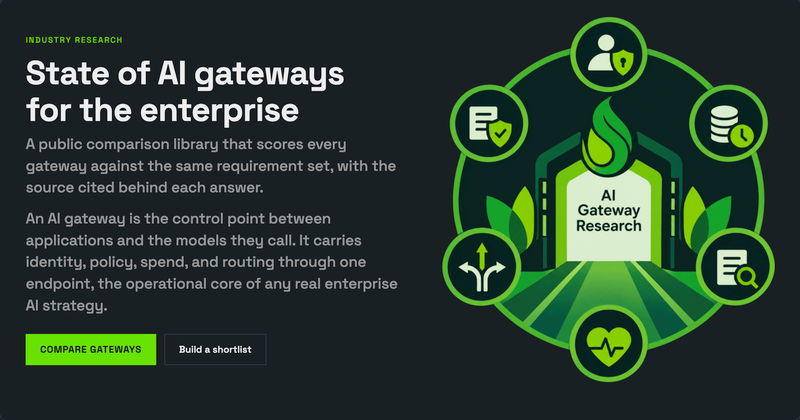
State of AI Gateways for the Enterprise
A public comparison library that scores every gateway against the same requirement set, with the source cited behind each answer. An AI gateway is the control point between applications and the models they call. It carries identity, policy, spend, and routing through one endpoint, the operational core of any real enterprise AI strategy.

Evaluating AI Systems Like Engineers, Not After the Fact

AI evaluation usually starts after something breaks. This post argues for engineering it instead: name failure modes first, run cheap checks before expensive judgment, and build the habits Liatrio teaches inside its AI Evaluation Bootcamp.

Silence Isn't Safety: What We Learned From Vetting AI Skills

What two months of building a vetting pipeline for AI skills taught us.

Reclaiming the Fifth Day: How AI Makes the 4-Day Workweek Possible
AI can accelerate production, but without organizational redesign, the gains disappear into more work. This white paper shows leaders how to turn AI-driven productivity into reclaimed time and a 4-day workweek.
Five Scanners, 5,000+ AI Skills: What We Learned About Skill Security

Liatrio tested five AI skill scanners against real malicious and benign corpora. Static tools never beat a simple keyword grep. LLM-backed scanners (Snyk, Cisco, SkillSpector) scored far higher, and requiring three of them to agree gave the cleanest high-confidence results.
Tokens to Outcomes: Why Our Partnership With SpaceXSI is Different
Turn AI adoption into measurable business impact. Discover why Liatrio's partnership with SpaceXSI goes beyond faster coding by embedding AI into workflows, metrics, and operating models that scale across the enterprise. Read how we connect tokens to outcomes, not just usage.
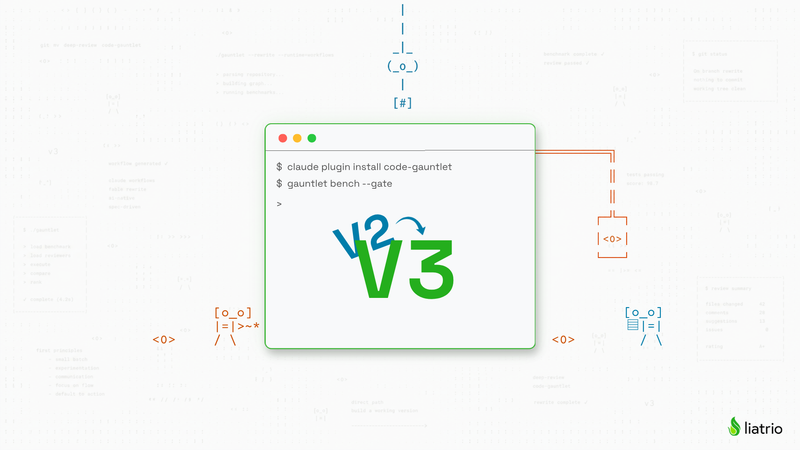
Code Gauntlet Rewrite to Claude Workflows

We built a benchmark, measured our AI code reviewer against the market, then let Fable rewrite it over a four-day autonomous session. The new version tops every tool we scored.

We Let Machines Build It, Then Made Humans Vouch For It

A single-line CVE fix that passed every automated test still needed a 45-minute CAB meeting to ship. That's the gap autogov closes: signed build evidence and policy-as-code that replace manual approval with a portable, cryptographic verdict a machine can trust.
From Discovery to Developer-Ready: An AI-Native Product Workflow
AI tools have changed how engineers work. But developers are only one part of the team that delivers software to customers. When product managers, designers, and delivery leads are left out of the transformation, the bottleneck just moves upstream.

Recruiting in the AI Era: Why We Are Automating the Paperwork, Not the People

We're done sitting through demos of "revolutionary" AI-sourcing platforms that can't spot real talent. Liatrio's recruiter still trusts humans to judge this, but built a Claude + MetaView + Lever automation to kill scorecard paperwork. Here's how.

How to Win in the Age of Artificially Intelligent Enterprises
Most enterprises have bought the tools. Almost none have changed how they work. This white paper shows leaders what it actually takes to move from AI experiments to enterprise-scale results.

Agent Skills: Turning AI workflows into reusable team capabilities.
Explore how Agent Skills transform repeatable AI workflows into reusable, installable, and governable team capabilities, and why they are emerging as a more powerful foundation than prompt libraries for scaling AI-native engineering practices across organizations.

AI Amplifies a Good Platform… but it Doesn't Fix a Bad One.

Enterprises making the most of AI right now have spent the last decade doing work that rarely makes headlines: cleaning up pipelines, building self-service infrastructure that's secure by default, establishing clear ownership over their systems and data.

The Agent Harness Is Part of Production

The PocketOS incident shows why AI agent safety cannot depend on prompt-based guardrails. When an agent harness has production access, teams need to understand, constrain, and verify it like any other part of their operational infrastructure.

We're Becoming an AI-First Company… Because We Already Were

Ten years in, and our purpose has never felt more urgent. Here's why Liatrio is formally declaring itself an AI-first enablement company — and why it took no reinvention at all.

Forge: Liatrio's AI-Native Flywheel Program
Forge isn't your typical AI training. Liatrio's immersive program builds real AI fluency through hands-on practice, structured workflows, and shared learning — turning experimentation into repeatable outcomes and building a culture that's genuinely AI-first.
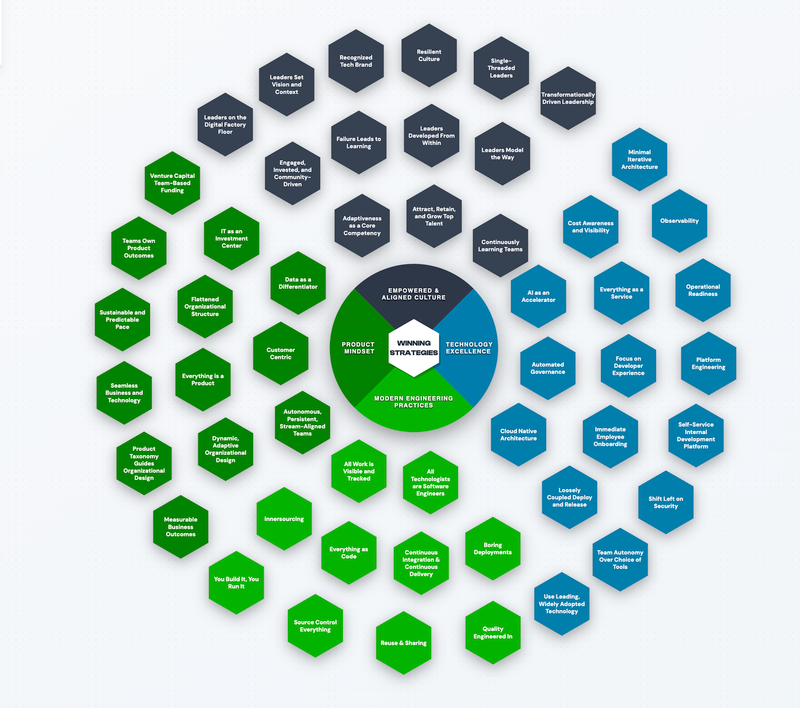
Ignite Interactive Playbook
This interactive guide outlines key strategies, frameworks, and actionable plays to modernize enterprise technology. Learn how to accelerate feature delivery, overcome technical challenges, and implement AI safely. Built from years of experience across industries like finance, healthcare, aviation, and transportation, the Ignite Playbook offers a structured approach to tackling modernization challenges.

AI-Native Jumpstart: Building with Spec-Driven Development
Speed without direction is just fast failure. Liatrio's Robert Kelly and Damien Storm break down why AI coding agents go off the rails and how their Spec-Driven Development workflow makes AI engineering reliable, repeatable, and actually useful.

Lead the Change or Be Left Behind: The New Leadership Mandate
70% of digital transformations fail. 95% of companies see zero ROI on AI. The gap between ambition and execution has never been wider. The reason is the leadership, not the technology. This whitepaper shows executives what it actually takes to break through.

So You Want to Move Back On-Prem...

As AI pushes workloads on-prem and to the edge, GitOps tools like Argo CD can fail without reliable connectivity; the fix is local caching—running a pull-through Git server and pre-bundling images to keep deployments and rollbacks working offline.